Automotive x Fashion Collaborations: The Role of CMF in Creating a Unified Brand Experience
Posted September 10, 2026
Colour, Material, and Finish (CMF) sits at the point where brand identity becomes something you can see, touch, and experience. Behind every successful fashion and automotive collaboration is a conversation between craftsmanship and identity, bringing together different design cultures, materials, and ways of making. The recent collaboration between Louis Vuitton and Singer represents the fashion houses first complete automotive project, but the partnership is less surprising than it might initially appear. At its heart, it is an exploration of how two distinct design languages can come together, with CMF creating the bridge between them and translating brand identity into a considered, physical luxury experience.
Translation Over Application
Successful collaborations find design territory both brands have in common. Sophisticated CMF strategies translate the design languages of the two brands and industries, not just applying one to the other. The result of this isn’t always an imitation of the other, but to distill the key characteristics of both brand DNA’s and to translate them meaningfully. The distillation in CMF takes the visual and sensory codes of a brand’s personality, identifying the most distinctive characteristics across colour, texture, craft, pattern, finish, proportion, and material to integrate them to the product. The Armani x FIAT collaboration wasn’t simply a FIAT with the Armani logo, strategised an expression of the fashion houses aesthetic with ceramic greige, dark green, reduced contrast, tailoring-inspired stitching, and laser-cut wood. When fashion brands collaborate with automotive brands, they translate the most recognisble yet most applicable elements into the design.
Material as a Storyteller
Materials have physical properties and emotional meaning. One does not simply apply the materials to the part, but curate a visual and sensory experience from them. They communicate the values of the brand. Rough, natural materials can suggest authenticity and heritage; highly precise metallic surfaces suggest technology and modernity; soft woven textiles suggest warmth and comfort. The questions being answered are how should the materials feel and resonate in the context of the car/automobile? The Porsche x Aimé Leon Dore collaboration utilised bouclé, leather, Persian carpets, and patinated finishes to tell the story of nostalgia and personal history of the vehicle.
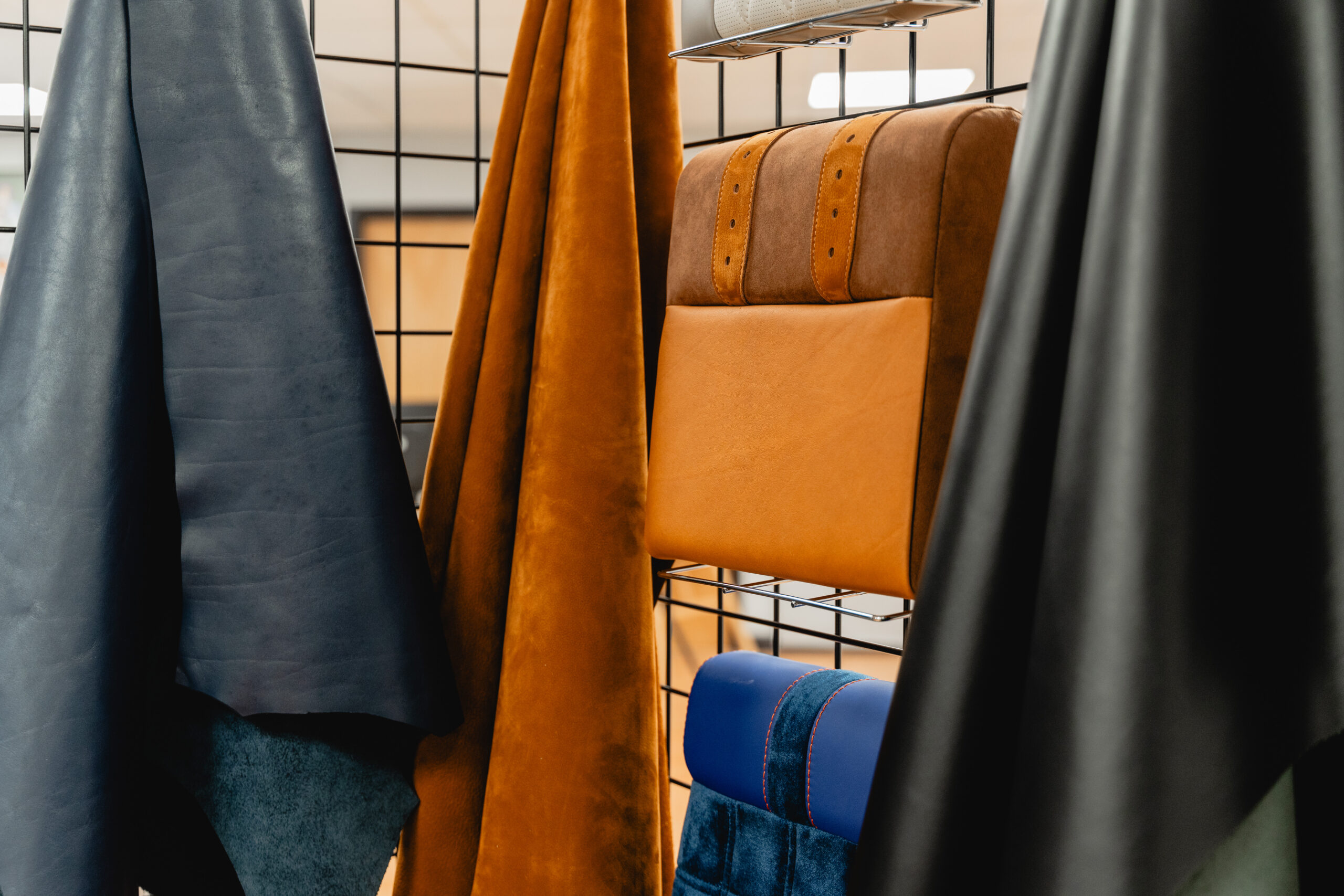
To expand on this, there are nuances to specifying the material choices. Leather, for example, can create very different expressions depending on its grain, finish, colour, and surface variation. One leather may feel soft, natural and understated, while another can feel structured, durable, and luxurious. The material plan therefore goes beyond naming the materials themselves. It defines the vocabulary of the surface and its interaction with the user and the surrounding environment; from texture, grain, sheen and reflectivity, ageing and patina, and ultimately perceived quality. These decisions collectively shape how the materials are experienced and how they contribute to the design story between fashion, automotive, and the distinctive brands.
Execution of CMF Strategy
Material selection is just one part of a CMF strategy. The execution of these materials reinforces the translation of a fashion brand into the car beyond the application. Louis Vuitton’s recent collaboration with Singer highlights quilting pattern, unique leather, wood, reimagination of the Porsche’s instrument cluster through Louis Vuitton’s Tambour watch codes, and custom accessories as examples of a consistent design treatment across multiple touchpoints. The collaboration works because the thinking didn’t stop at one material, each detail utilises a multitude of materials and details that reinforces each brand’s best qualities.
Further to this, the same material can feel completely different depending on the finish and overall execution. This is where manufacturability matters. This encompasses the detailed treatment of surfaces, edges, joins and finishes, alongside specialist manufacturing processes and precision engineering. Those processes define the execution of a CMF strategy, the story of the collaboration, and perceived quality.
Creating a Singular Design Language
Key to these collaborations, despite being different industries, both fashion and automotive emphasise the importance of identity, craftsmanship, desirability, and experience. The Rolls-Royce x Hermes collaboration is a clear example of how shared values achieve a singular luxurious design entity. The Rolls-Royce x Hermès collaboration shows how the two brands’ shared appreciation for craftsmanship and materiality could be manifested in an automotive context, with Hermès’ leather expertise and bespoke colour becoming part of the vehicle experience. This shifts the narrative from why automotive brands and fashion houses collaborate to what is the result when their design languages meet. Each touchpoint from the first impression to the exterior surface and door opening, to the cabin, lighting, accessories, and tactile moments are all places where the customer interacts with and encounters the brands.
What do Automotive x Fashion Collaborations Tell Us?
These collaborations are valuable because they force both automotive and fashion brands to be more deliberate about what they stand for and how that is expressed physically. The strongest collaborations demonstrate that CMF is not the final layering of design but an intrinsic value to communicating a product of intent and tell the story of the collaboration.
At Envisage, CMF is viewed as the point where brand ambition becomes tangible, bringing together brand DNA, materiality, execution, and experience. Our design team turns brand principles and abstract ideas into a product, supporting material choices and execution of the strategy to a desirable experience that is reflective of the client and project.