Connected Expertise: An Insight into the Composite Supply Chain
Posted November 3, 2026
How material performance, precision tooling and specialist composite manufacturing contribute to a quality-focused production process.
What does it take to turn a block of tooling board into a high-performance composite component? It takes more than advanced materials or precision machinery. It takes the right expertise at every stage. Producing high-quality composite components starts long before the final part takes shape. It is a process that brings together material science, precision engineering and specialist manufacturing expertise, with each stage playing a crucial role in the performance and quality of the finished component.
The Value of Connected Expertise
Taking a process-led view highlights the value of understanding the complete manufacturing requirement from the outset. The right tooling material must suit the application, the patterns, tools, jigs & fixtures must be manufactured to the required geometry and specifications, and the composite process must be appropriate for the component being produced.
Bringing this expertise together are three specialist businesses: the material technology of Base Materials Ltd., the precision machining capabilities of Envisage Group Ltd., and the composite manufacturing expertise of BAMD Composites. Together, their contributions demonstrate how the right material, accurately manufactured tooling and specialist production techniques support an efficient route from tooling board to composite component.
Starting with the right tooling board
Choice of machining board is a key consideration in the composite manufacturing process. Dimensional stability, quality surface finish, reliable machinability and thermal stability can all influence its suitability for the intended application. Base Materials Ltd.’s BE978 epoxy tooling board, utilised by Envisage, is a well-established option for composite precision patterns, direct tools, jigs & fixtures, offering a low coefficient of thermal expansion of 39 × 10⁻⁶ K⁻¹ and a glass transition temperature (Tg) of 145°C. These properties make dimensional stability and temperature capability important parts of its material proposition, particularly where maintaining tool geometry and achieving consistent manufacturing results are priorities. Selecting the right material is about more than simply finding a board that can be machined. The properties of the tooling material play an important role in supporting dimensional accuracy, maintaining the integrity of the tool and providing a reliable foundation for the subsequent manufacturing stages.
Surface quality is another important consideration. The board’s surface characteristics provide a high-quality foundation, giving Envisage a strong starting point for machining and finishing the tool. This helps Envisage achieve the surface quality requirements needed for a high-quality finish on the final component.
Alongside its technical performance, the material offers sustainability credentials to support more informed material choices. It contains 26% bio-based carbon content, measured in accordance with ISO 16620, and its product carbon footprint has been calculated using a cradle-to-gate life-cycle assessment (LCA) methodology, providing data to support sustainability assessments and supply-chain reporting.
From tooling board to precision-engineered tooling
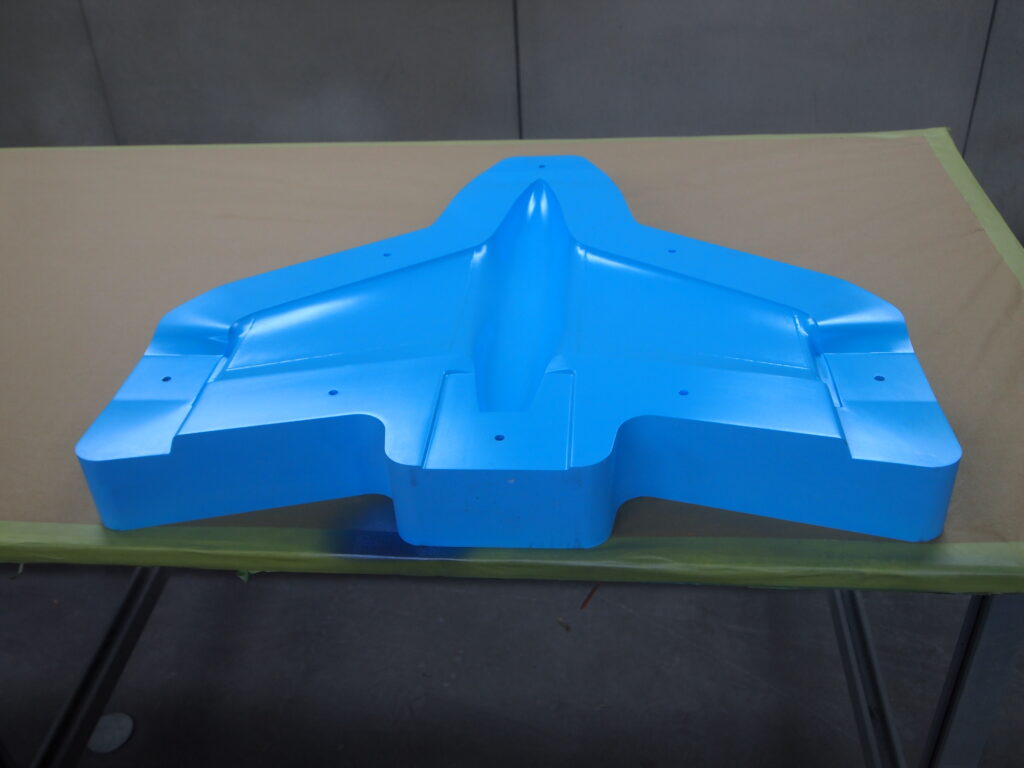
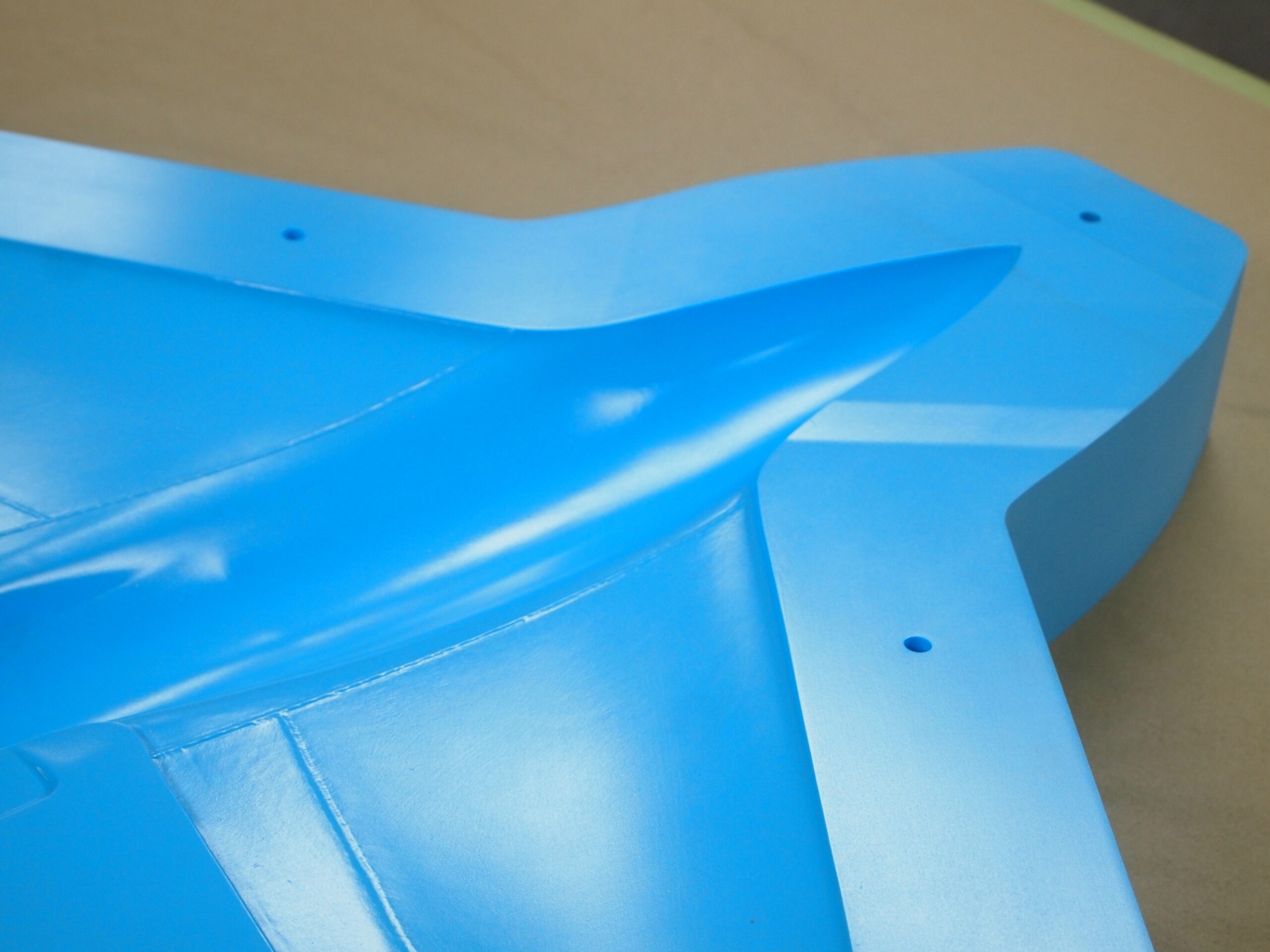
At Envisage Group Ltd., the focus is on precision manufacturing, machining BE978 into tooling designed around the required geometry and manufacturing process. With the component geometry and relevant manufacturing data available, Envisage can design direct tools using its in-house CAD capability, develop the machining programmes and manufacture the tooling using its precision machining facilities.
Five-axis milling allows complex geometries to be machined to the required specifications, with close attention to precision and tight tolerances. Inspection is equally important, with coordinate measuring machine (CMM) inspection and scanning capabilities supporting the verification of key features and dimensions. CMM equipment is calibrated in-house by Envisage Precision Solutions. The combination of advanced machining technology and detailed inspection allows complex tool geometries to be produced and verified against the required specifications. This attention to detail is essential, as the accuracy of the tooling directly influences the quality and consistency of the components manufactured from it.
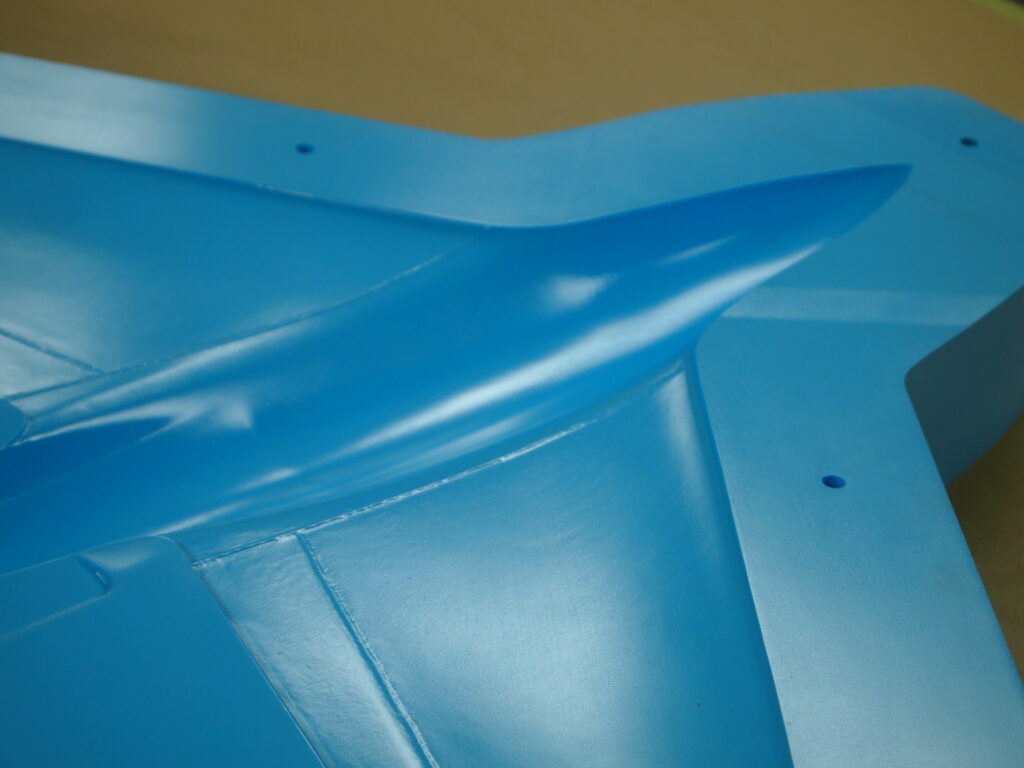
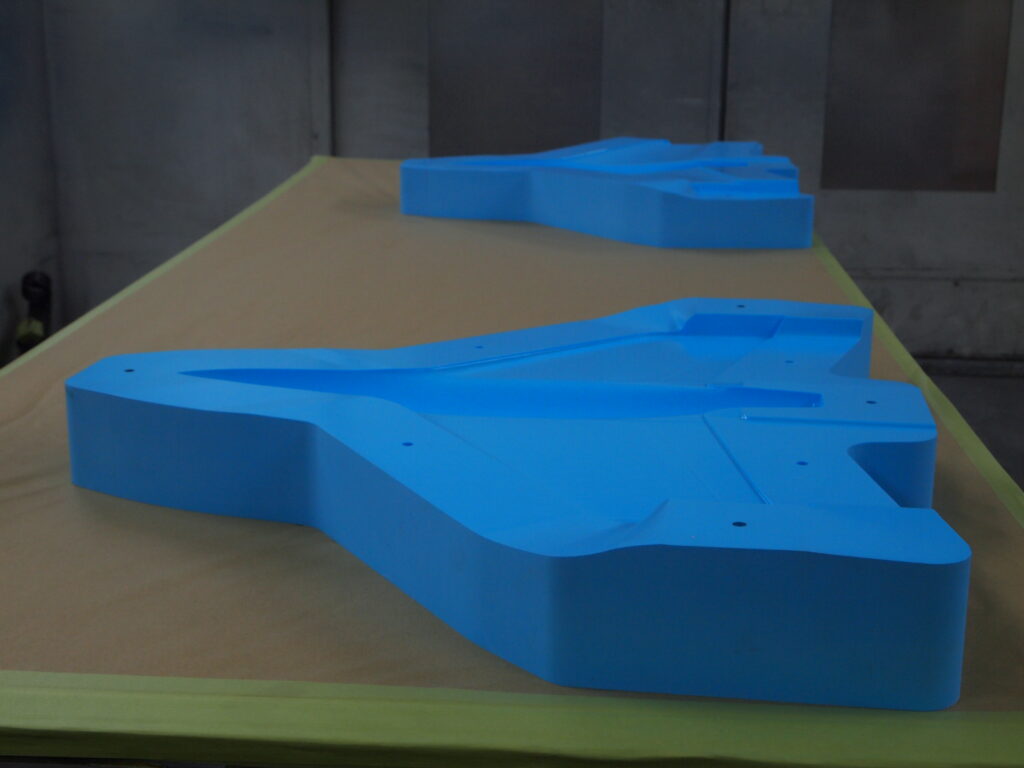
With an in-house paint facility, Envisage can seal patterns & direct tooling, achieving that high-quality finish as part of its manufacturing capability. This combination of design, programming, machining, inspection, scanning, and finishing enables Envisage to manage the key stages of the manufacturing process in-house through one connected offering.
Combined with the quality of the material choice, the quality of the tooling designed & machined is fundamental to the success of the final composite component. The result is more than a machined tool: it is a purpose-designed production asset that provides the foundation for composite manufacture. With Envisage, the result is precision-machined patterns, direct tools, jigs or fixtures, all developed with the intended manufacturing application in mind and providing the tooling platform for the next stage of production.
Putting the tooling into composite production
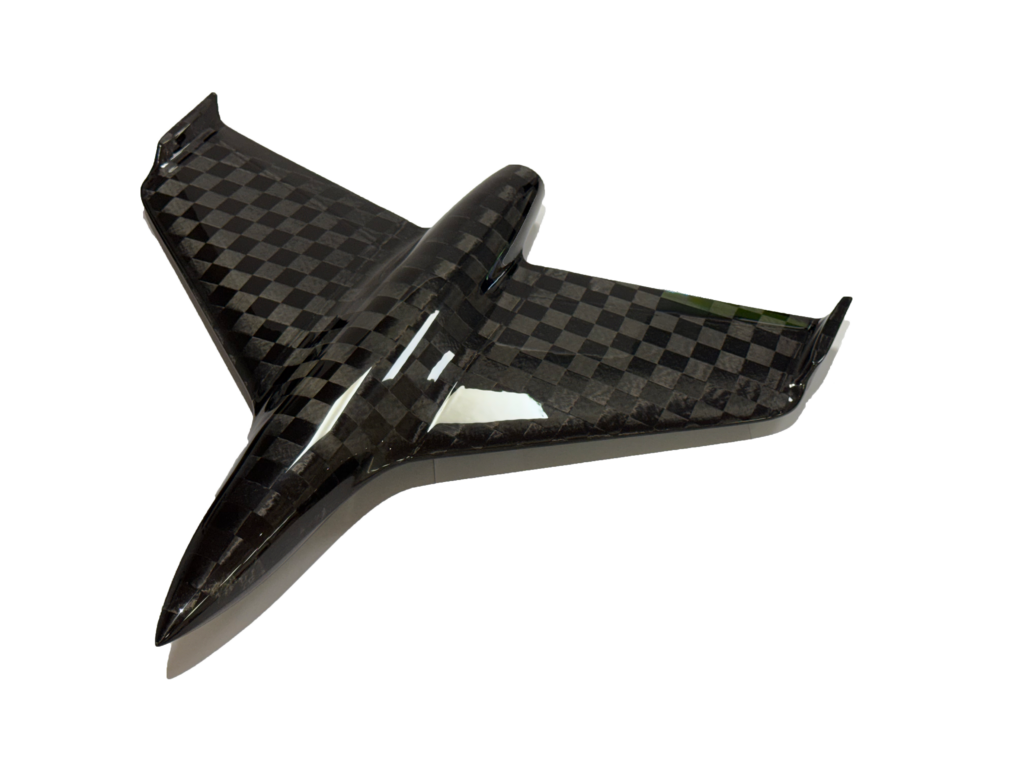
Once the patterns and direct tools have been manufactured, the focus moves to composite production. BAMD Composites brings specialist expertise in manufacturing composite parts, specialising in high-performance carbon fibre components. Using the patterns and direct tools, the composite manufacturing process can include carbon-fibre lay-up, autoclave curing, demoulding, trimming, bonding and assembly. Each stage requires its own manufacturing knowledge and attention to detail. The composite material must be laminated, cured under the specified process conditions and then carefully demoulded. Trimming and bonding follow as the component moves towards its required assembled form.
Together, these processes transform the prepared tooling into a finished composite component, with each stage contributing to its final form, quality and structural integrity. From carefully positioning the carbon-fibre layers through to curing, finishing and assembly, specialist manufacturing knowledge is required to achieve the intended result.
The accuracy and suitability of the tooling remain important throughout this wider process, while BAMD Composites’ manufacturing capabilities bring the material and production stages together. Its specialist knowledge supports each stage, from initial lay-up through to final assembly.
A Manufacturing Process Built Around Precision
What makes this process particularly valuable is the connection between each stage. Material selection informs the tooling design, precision machining provides the foundation for composite manufacture, and the suitability of the tooling supports the subsequent production process. By understanding how these stages work together, each specialist contribution plays a part in achieving the quality and consistency required from the finished component.
For end clients, understanding the expertise behind composite production can help inform the decision of which manufacturing partner to choose. Looking beyond the finished component to the wider supply chain, from material selection and tooling precision to the communication and relationships between suppliers and manufacturers, provides a clearer picture of the processes and capabilities that support quality, consistency and efficient production.
See the Complete Journey at Advanced Engineering
How do material performance, precision tooling, and composite manufacturing come together in practice? At Advanced Engineering, visitors will have the opportunity to see the answer for themselves. An opportunity to explore the technologies, materials and manufacturing capabilities shaping today’s engineering industries. The three companies have come together to demonstrate the complete process through a composite table-top model, showcasing BE978 epoxy tooling board, precision tooling manufacture and composite production.
The completed model brings the entire manufacturing journey together in one example, allowing visitors to see how material performance, precision tooling and composite manufacturing combine to create a finished component. It offers a practical demonstration of the expertise involved at every stage and the importance of collaboration in delivering a successful manufacturing outcome. This process highlights the specialist expertise and close collaboration between suppliers that underpins the production of quality composite components.
Visit Envisage Group Ltd., Base Materials Ltd., and BAMD Composites at Advanced Engineering to learn more about their respective capabilities and the role each plays within the wider manufacturing landscape.